California School District rules that fire does not produce light and heat
A Silicon Valley family wanted their son’s science test graded fairly. It became a battle
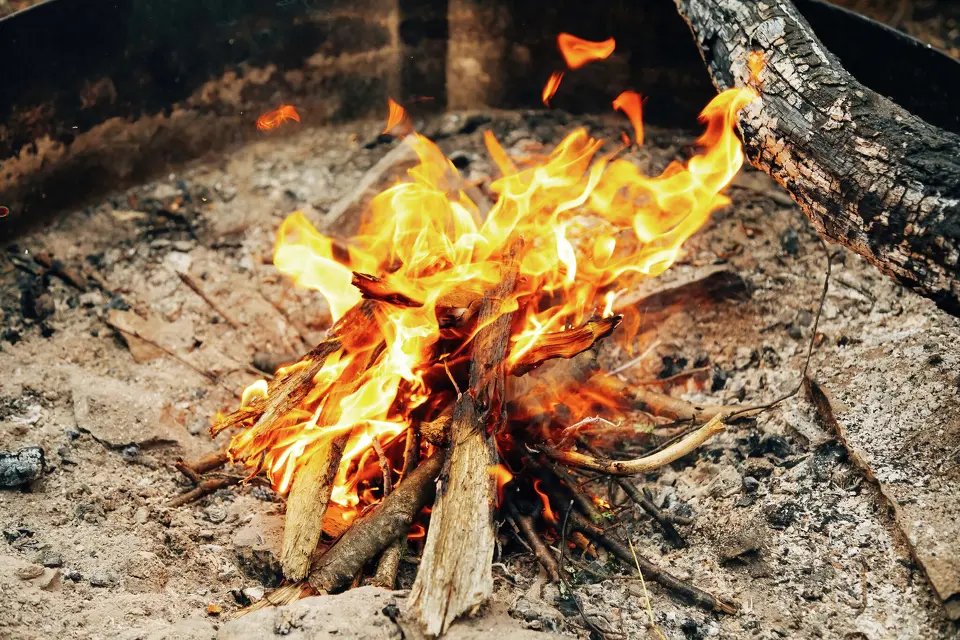
A Fremont family spent six months fighting with their school district over multiple-choice answers on their son’s honors chemistry final exam that contradicted scientific fact, such as burning wood producing oxygen.
Burning firewood does not produce oxygen.
That is an incontrovertible scientific fact, one of several a Fremont family spent six months fighting for, a battle they never thought they’d have to wage against their own school district.
This bitter dispute, dating to May, technically revolved around just six disputed answers on the final exam for honors chemistry at Mission San Jose High School last spring — which might seem insignificant compared to the massive financial, political and academic challenges facing public school systems across the state.
But what was really at stake, said the mom, Shilpa Viswanathan, was what was “right.”
She didn’t mean morally right, or the right thing to do, but literally the factually accurate right answers on a 10th-grade multiple-choice science test.
In a current environment where the country’s top officials are making unsupported claims — including Health Secretary Robert Kennedy Jr.’s contention that vaccines cause autism and President Donald Trump’s statements that wind turbines cause cancer as well as whale deaths — the sanctity of proven science has waned.
Viswanathan said she didn’t want to see disregard for established scientific truths trickling into her son’s school, which is located amid one of the Bay Area’s major tech hubs and is one of the top academic public high schools in the state.
That it could be happening in Fremont, in her son’s sophomore science class, shocked her.
And so, when she, her son and her husband discovered several right answers on his final exam were marked wrong, they wanted to make sure the truth would win out.
“It’s about science,” Viswanathan said.
They never believed pointing out errors related to six answers on a chemistry test would turn into a bitter, months-long battle against the Fremont Unified School District.
In the end, with science and the publisher’s answer key on their side, the family succeeded with three. The district would not budge on the rest.
“We understand and acknowledge that this matter took longer than it should have to resolve, and we regret the delay,” district spokesman Barth Paine said in an email to the Chronicle last week. “When concerns arise about the accuracy of assessment content, including matters of scientific fact, the District works to review the issue thoroughly.”
The district declined to provide full explanations for its decisions.
From the start, the family felt stymied by the process, forced to bypass the teacher and contact administrators just to see their son’s graded exam after he questioned his score given how well he thought he did. What followed were months of emails, meetings and a four-step complaint process challenging the teacher’s grading decisions.
With the teacher already on summer break, the parents got their first look at their son’s test on June 4 in the principal’s office, where they identified several answers marked wrong that they believed were right.
One, which asked about the products and type of reaction related to firewood combustion, immediately stood out:
30. Which of the following statements is correct?
a. The cellulose and oxygen products indicate that this combustion reaction is endothermic.
b. The heat and light products indicate that this combustion reaction is exothermic.
c. The cellulose and oxygen products indicate that this combustion reaction is exothermic.
d. The heat and light products indicate that this combustion reaction is endothermic.
The teacher identified statement C as the correct answer, which would likely surprise anyone who has ever blown into a campfire to stoke the flames. Viswanathan’s son chose statement B. (Endothermic indicates a process that absorbs heat from its surroundings while exothermic is one that releases heat. However, that was not part of the dispute.)
The teacher argued in an email to the parents shared with the Chronicle that light is not always a product of the combustion process. While true, oxygen and cellulose never are. And notably, statement B does not state that light is always present.
At its most basic, firewood combustion consumes the oxygen and cellulose, releasing the stored energy, producing heat and typically light, as well as carbon dioxide, water vapor and residue or ash.
With summer break upon them, district officials told the family they had to wait until school started again in the fall to resume the conversation. On Aug. 11, the first day of school, the boy’s father, Sridhar Ramaswamy, messaged the teacher identifying concerns with six questions.
The teacher responded that two of them included two possible correct answers and their son’s score would be updated. The other four, she said in an email the parents provided to the Chronicle, were accurately graded.
A back-and-forth email conversation ensued, with the teacher defending the answers to the four questions, including number 30.
“Heat will be present, but combustion reactions do not necessarily happen with light,” she said, declining to elaborate after Ramaswamy submitted additional questions and insisted there was online scientific evidence for his son’s answer.
Principal Amy Perez stepped into the fray on Aug. 13, backing the teacher.
“After reviewing the matter, I can confirm that (the teacher’s) test questions and answer key align with the CA State Standards and the curriculum used in her classroom,” she wrote in a note to the parents. “While alternative perspectives (that) may be found online are respected, our grading reflects the instructional materials, standards, and assessment criteria provided to all students in (the teacher’s) class.”
Perez added that “a teacher’s determination of a student’s grade is final unless there is evidence of a clerical or mechanical error, fraud, bad faith, or incompetence. Disagreement with a teacher’s professional judgment alone does not meet these criteria.”
In August, the family initiated an official complaint process against the teacher, meeting with the principal and then central office administrators.
Paine said the family received weekly updates as the process moved forward and that communication regarding the accuracy of test answers with the curriculum publisher, Savvas Learning, delayed the resolution of the complaint process.
Last week, the parents received the district’s final 3-3 decision on the disputed questions. Neither the teacher nor school board President Larry Sweeney responded to requests to comment on the controversy, including how the district could support the statement that firewood combustion produces oxygen and cellulose.
As for the firewood question, district officials fully backed the teacher. They affirmed her position that statement B was incorrect, without addressing the problem of statement C.
“In regards to the exam question, the students observed a demonstration lab during class, accompanied by a lecture that clearly explained that combustion does not always produce light,” Paine said in an email to the Chronicle. “Our staff affirm that combustion does not always produce light.”
The district failed to acknowledge that the teacher’s answer violated scientific fact as well as the publisher’s answer key, which confirmed the correct answer was heat and light, since “combustion is a chemical reaction that typically releases energy in the form of heat and light, which makes it an exothermic process.”
Viswanathan said her family was disappointed by the outcome, not only given the short shrift to science, but by the district’s focus on bureaucracy rather than students and learning.
“The process is nothing but hogwash,” she said. “I have no other words but incompetency if a teacher says oxygen comes out of burning wood.”
She emphasized the family’s fight never had anything to do with her son’s grade. Six questions were never going to make a big difference after a semester of work.
But even as the district wrapped up the complaint process, it didn’t appear to be over for the family, with what appeared to be a threat from the district hanging over their heads.
Viswanathan and her husband, during their review in June of their son’s exam, snapped a few pictures of the test even though the principal had said pictures were not allowed. But the test included diagrams and graphs, which would have been impossible to replicate in the notes they were allowed to take, the mom said.
She added they didn’t know how they would otherwise be able to prove their son’s answers were right without a record of the questions and answers, but the district considered their action a serious violation.
“Your actions render the test unusable,” Angela Bianchini, Associate Superintendent of Human Resources, told the parents in the Tuesday letter outlining the district’s final conclusions. “Please understand that this situation is extremely concerning. The financial and operational costs to the District as a result of this incident is (sic) currently being assessed.”
District officials would not say whether they intend to bill the family for any costs.
“The District affirms that a thorough investigation was conducted in close collaboration with the family, teacher, and site administrator,” Paine said Friday. “And we believe the matter has been appropriately resolved.”